Evidence-based ACL and knee rehab from a physiotherapist who has been through it herself. Strength testing, biomechanics, and a return to sport plan built on numbers, not timelines.
Physiotherapist, acro performer and coach in London. I work with dancers, gymnasts, aerialists, cheerleaders and active people who want their knee to hold up under high impact, not just feel fine walking around.
Chartered Physiotherapist, HCPC and MCSP registered, with an MSc in Performing Arts Medicine from UCL and an affiliation with the UCL Department of Surgery and Interventional Science. Based at GymNation in London Bridge and available online.
Ask me a question →I have torn my ACL twice, once when I was 19 and then again in 2023. Meniscus, bone bruising, MCL strain, the triad thing: I had them all. I was training some form of gymnastics and circus work 3–4+ times a week, so stopping was the hardest part.
I documented my full year of rehab and return to training: every strength test, every setback and every milestone, because I wished I'd had that when I was the one on the physio bed.
I know ACL rehab because I've lived it. We don't guess, we measure, and we help you keep doing the things that matter to you.
Watch the full journey →My year-long ACL recovery, start to finish.


Resolving your ACL injury takes more than a set of exercises. We merge strength testing with biomechanical assessment so every decision is made on your numbers.
Your history, your goals, the stage you are at now and what you are actually struggling with. We start by finding what is standing between you and your sport.
We test your quad, hamstring and hop strength against your uninjured leg, and assess how you land, squat and cut. Strength and movement are measured together, because how you move matters as much as how strong you are.
You move to the next phase when your numbers say you're ready, not because a set number of weeks has passed on a generic sheet.
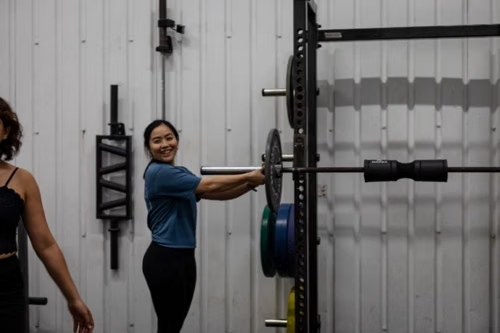
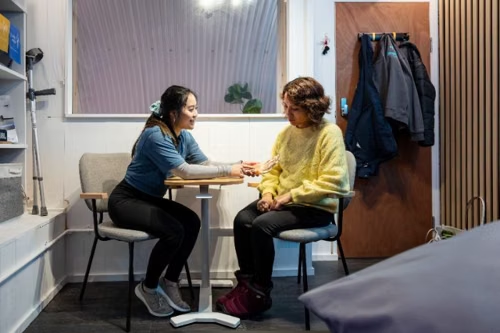
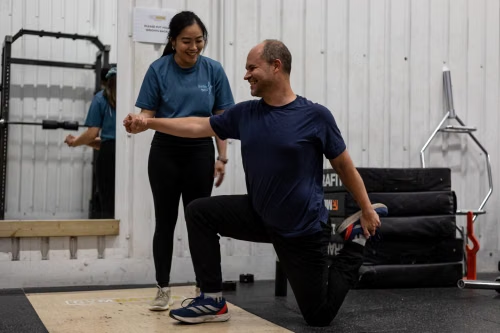
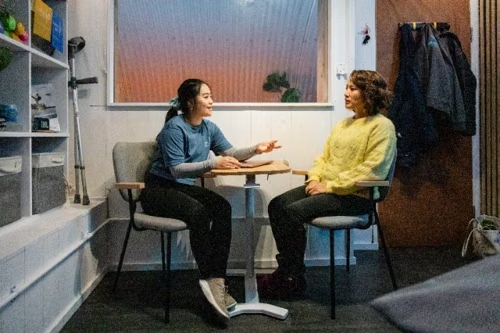
ACL rehab isn't a single session. Progress is tracked and re-tested every month so your programme evolves with your numbers. Only for individuals who are serious about getting back to their sport.

Online or at London Bridge.
If ongoing support is the right call for your knee, we will talk it through at your consultation. Nothing to commit to up front.
Entirely optional, decided with us at your assessment. Cancel anytime.
"Beth was brilliant in supporting a young circus student on our programme. Listened to their concerns and worked with them not only to support their recovery but also to sustain a healthy career. Beth went above and beyond, and they are now thriving. 100% recommend for a thorough and excellent service."
"Beth at Flexibility Matters is amazing! I went to her with killer knee pain, I could barely walk. She worked with me for months and now my knee's totally back to normal. She's super knowledgeable, really nice, helpful, and genuinely cares about your recovery."
"I can't even begin to put into words how life changing my experience with Beth at Flexibility Matters has been. Beth's kind, caring, methodical and modern approach means I'll be able to continue with my travels and look after my body."
"It made such a difference knowing she was so invested in getting me better. I can't recommend it enough! Thank you, Beth!"
The questions people ask most before they book. If yours isn't here, send it over.
Not everyone needs surgery. Some people manage well with rehabilitation alone, particularly if the knee feels stable, there is no significant meniscal damage, and their sport doesn't involve a lot of cutting, pivoting and landing. Others do better with reconstruction. The decision depends on how unstable the knee feels day to day, what else was injured, and what you want to get back to. We will help you work through that with your surgeon rather than push you toward one answer.
Usually somewhere around 12 to 16 weeks, but the week number is not what decides it. Before running we want full knee extension, a settled knee with no persistent swelling, quadriceps strength in the region of 70–80% of your other leg, and the ability to hop and land on that leg with control. Some people meet those criteria earlier and some later. Running before they are met is one of the most common causes of setbacks we see.
For pivoting sports — gymnastics, circus, cheer, dance, football, netball, skiing — the evidence points to nine months at the absolute earliest, and often longer. Studies have found that each extra month of rehab up to around nine months substantially reduces the risk of re-injury.
Timing is one input; passing your testing is the other. We look for limb symmetry above 90% across strength and a hop battery, movement quality under fatigue, and your own confidence in the knee, which we measure rather than guess at.
Limb symmetry index compares your injured leg with your uninjured one, as a percentage. If your injured quad produces 80% of the force of your other side, that is an LSI of 80%.
The usual target before return to sport is above 90% across quadriceps strength, hamstring strength and a series of hop tests. One caveat we always flag: if your uninjured leg has also lost strength during your time off, 90% of a weakened leg isn't the benchmark it looks like — which is why we test both sides against your own baseline and your sport's demands.
At Flexibility Matters, the initial ACL and knee consultation is £125 for 50 minutes, online or at our London Bridge clinic. If ongoing support is the right call, the Monthly ACL Programme is £299 per month and includes weekly 1:1 sessions, a personalised programme, monthly strength and hop testing, and weekday message support. The programme is optional and decided together at your assessment, and you can cancel at any time.
Yes, and a good part of our ACL work is online. Sessions run over video, with testing adapted to equipment you can get to — most commonly a gym. Online works particularly well for people who already train somewhere, and for performers who are touring or away from London. Where hands-on assessment would genuinely change the plan, we will say so and get you in at London Bridge.
Before, if there is time. Going into surgery with a knee that already moves fully and a quad that hasn't shut down is consistently linked to a better recovery afterwards. This is often called prehab. If you have already had your surgery, the next best time to start is now — quadriceps strength lost in the early weeks is the single hardest thing to get back later.
No. You can book directly with us as a self-referring patient. If you are already under a surgeon or consultant, we are happy to liaise with them so your rehab and their plan line up, and we will tell you plainly if we think you need a medical opinion we can't provide.
Are you in?
50 minute ACL and knee specialist consultation, £125. Online or at London Bridge.

Ready when you are
ACL and knee specialist consultation, £125, online or at London Bridge. If you are not sure whether physio is the right call at all, send a question and you will get an honest answer.
Call or WhatsApp +44 7592 471175
Email info@fmphysio.com
GymNation, 26 Druid St, London SE1 2EY
Sent
You will get a reply from info@fmphysio.com.
Free guide
A step-by-step walk-to-run plan: plyometric prep, five progression stages, and clear rules for what to do if pain shows up.
Not after the guide?
You're in
Open it below, it's yours to keep. Feel free to email any questions to info@fmphysio.com.
Open The Return to Run Guide